Application Of Ultrasonic Welding Machine in Nonferrous Metal Industry
May 20, 2022
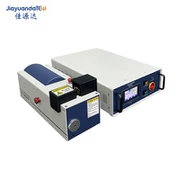
The structure of ultrasonic welding machine is relatively complex, including three main components: ultrasonic generator, transducer and power supply. Different structures will form different types of ultrasonic welding machines. According to the types of welding workpieces, they can be divided into ultrasonic metal welding machines and plastic welding machines. Different types of welding machines are used differently in various industries. Let's learn about the application of ultrasound welding machines in non-ferrous metal industry.
Ultrasonic welder has been used in the non-ferrous metal industry for a long time, but with the increasingly extensive application of non-ferrous metals, the equipment for processing it has also begun to be concerned by everyone. There are many kinds of non-ferrous metals. Let's take Jin as an example to explain the processing and application of ultrasonic automatic welding machine. Jin has corrosion resistance and can be used to make stainless steel and other corrosion-resistant alloys, hydrogenation catalysts, ceramics, glass and compounds for preparing Ni. It is very important to ensure the welding process of pure brocade materials. The manufacturer of ultrasonic welding machine has improved the welding defects and ensured the quality of pure brocade processing. There is no phase transformation in the solidification process of pure nickel liquid, which is easy to produce eutectic with low melting point and hot crack. In the welding process of traditional ultrasonic metal welding machine, cracks, pores and coarse grains are easy to appear in the process of rapid cooling and solidification, which affects the corrosion resistance and mechanical properties of the welded joint. The frequency of cracks can be reduced in the welding process of ultrasonic plastic welding machine and the welding quality can be improved to a certain extent.
The ultrasound welding machine is relatively mature in the welding of ordinary metals. It can achieve the advantages of small weld, fast welding speed and stable welding. However, the ultrasonic plastic welder in the welding of non-ferrous metals still needs to be improved. It needs to be improved according to the characteristics of different non-ferrous metals and the requirements of non-ferrous metals for welding. The improvement of this ultrasonic metal welding machine can not be done once and for all, because the conditions required for the fusion of non-ferrous metals with other metals are relatively complex, and the factory needs to get the corresponding improvement methods in the actual operation of the ultrasonic welding device, so as to effectively improve the welding effect.