Q: What is the difference between an ultrasonic extractor and a washer?
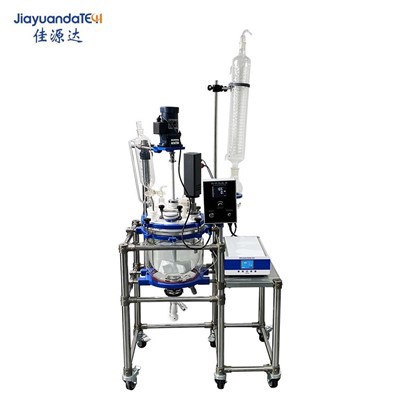
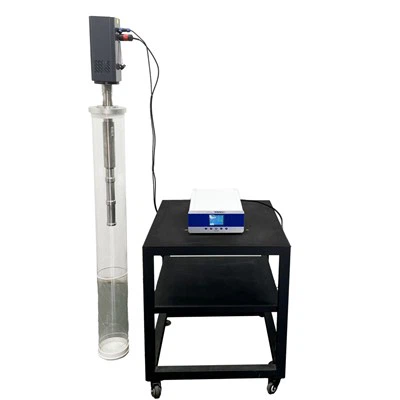
A: Ultrasonic extractor, also known as ultrasonic extraction machine, is mainly used to reduce the interaction force between the target extract and the sample matrix through the rapid mechanical vibration waves generated by piezoelectric transducers, thereby achieving solid-liquid extraction separation. In industrial applications, the use of ultrasound for cleaning, drying, sterilization, atomization, and non-destructive testing is a very mature and widely used technology. The ultrasonic cleaner adopts the principle of ultrasonic cleaning, which can achieve a comprehensive and clean cleaning effect on objects, especially for deep holes, blind holes, and concave and convex grooves. It is the most ideal equipment for cleaning, without affecting the material and accuracy of any object. At the same time, it can be used for extraction, degassing, mixing, and cell crushing in experiments in biochemistry, physics, chemistry, medicine, scientific research, and colleges and universities.
Q: What is the appropriate temperature control for ultrasonic extraction equipment?
A: The temperature is generally between 30-50 ℃ for ultrasonic enhanced extraction, which will not damage some effective ingredients in traditional Chinese medicine that are thermally unstable, easily hydrolyzed or oxidized. The ultrasound time is generally controlled at 30 minutes.
Q: Does ultrasound have extraction function?
A: Yes, ultrasound can replace the conventional manual shaking method for extraction. In fact, ultrasound not only has the function of extraction, but also promotes the dissolution of reagents, and can help clean used experimental equipment, etc. In short, ultrasound has many practical functions.
Q: Advantages and Disadvantages of Plant Extraction Methods and Advantages and Disadvantages of Plant Extraction
A: 1. Ultrasonic extraction Ultrasonic cavitation accelerates the extraction of effective plant components. Advantages: Short extraction time, simple extraction method, high extraction rate, low extraction temperature, avoiding damage to effective ingredients caused by high temperature and pressure. Disadvantages: High container requirements, noise, equipment amplification, and other issues. 2. Microwave extraction In the microwave field, there are differences in the ability of substances to absorb microwaves, and certain components can be selectively heated and extracted. Advantages: Short extraction time, simple equipment, and low investment. Disadvantage: The extraction mechanism is unclear. 3. Supercritical extraction Replacing conventional organic solvents with supercritical fluids for extraction and separation. Commonly used for volatile components, fat soluble substances, high heat sensitive substances, and valuable medicinal herbs. Advantages: Low temperature, retention of active ingredients, no solvent residue, high purity, and simple operation. Disadvantages: High voltage equipment requires a large one-time investment and high operating costs. 4. Membrane separation Advantages: Efficient separation effect, low energy consumption, no phase change, working temperature close to room temperature, pure physical process, simplified process, and continuous operation. Disadvantage: Membrane fouling requires regular replacement.
Q: What is the working principle of ultrasonic assisted extraction technology?
A: The working principle of ultrasonic extraction Ultrasonic circulation extraction has been widely used in traditional Chinese medicine extraction. Ultrasonic extraction utilizes the cavitation effect of ultrasound to increase solvent penetration, improve drug dissolution rate and dissolution frequency, thereby increasing the diffusion of material components, shortening extraction time, and accelerating the extraction process. Ultrasonic waves can generate mechanical effects, cavitation effects, and thermal effects. When the ultrasonic generator generates ultrasonic frequency electrical signals above 20kHz, they are transformed into mechanical vibrations of the same frequency through an immersion transducer and propagated into the extraction medium. They then radiate forward in the form of ultrasonic longitudinal waves, causing the extraction medium to vibrate and produce many small bubbles, which then burst, This effect, known as "cavitation," continuously acts on solutes, forming subtle local impacts on the surface of the material, causing it to quickly break down and decompose. Under the special action of ultrasonic cavitation and pulverization, the cavitation bubbles generated by cells in the solvent instantly collapse and rupture, allowing the solvent to penetrate into the interior of the cells and dissolve the components in the solvent. Under the action of ultrasonic vibration, it promotes the dissolution of ingredients into the solvent, improves the extraction rate of effective ingredients, and thus achieves the goal of extracting effective ingredients
Q: What about advantages of ultrasonic extraction?
A: 1. High extraction efficiency: The unique physical properties of ultrasound can promote the breaking or deformation of plant cell tissues, making the extraction of effective ingredients in traditional Chinese medicine more complete. The extraction rate is significantly increased by 50-500% compared to traditional processes; 2. Short extraction time: Ultrasound enhanced traditional Chinese medicine extraction usually takes 24-40 minutes to obtain the best extraction rate, and the extraction time is greatly reduced by more than 2/3 compared to traditional methods, resulting in a large amount of raw material processing for medicinal materials; 3. Low extraction temperature: The optimal temperature for ultrasonic extraction of Chinese medicinal materials is 40-60 ℃, which has a protective effect on the active ingredients in medicinal materials that are unstable, easily hydrolyzed or oxidized when exposed to heat, while greatly saving energy and energy consumption; 4. Wide adaptability: Ultrasonic extraction of Chinese medicinal materials is not limited by component polarity or molecular weight, and is suitable for the extraction of the vast majority of types of Chinese medicinal materials and various components; 5. The extracted medicinal liquid has fewer impurities and the effective ingredients are easy to separate and purify; 6. The extraction process has low operating costs and significant comprehensive economic benefits; 7. Easy to operate, convenient for equipment maintenance and upkeep.
Q: Can ultrasonic extraction of traditional Chinese medicine really improve drug efficacy?
A: The working principle of ultrasonic extraction is that ultrasonic waves have a great deal of energy to break down large organic molecules and turn them into small molecules, extracting more medicinal effects from traditional Chinese medicine. Suggestion: It is a method of using ultrasound assisted solvent extraction, mainly due to the high-speed and strong cavitation effect and stirring effect of ultrasound, which directly destroys the cell wall and accelerates the dissolution of medicinal materials. Ultrasonic extraction does not alter the chemical structure of the active ingredients.
Q: What about the purpose of ultrasonic extraction?
A: 1. Can be used for biological and plant cell fragmentation; 2. Can be used for extracting effective ingredients from both biological and plant sources; 3. It can be used for low-temperature extraction of effective ingredients in Chinese herbal medicine; 4. Can be used for BCR element morphology extraction; 5. Low energy states can activate bacteria; 6. High energy state can kill live bacteria; 7. Can be used for DNA extraction and DNA splicing; 8. Can be used for gene introduction; 9. Can be used for aging treatment of raw wine; 10. Can be used to break the dormancy state of plant seeds, in order to improve germination rate and early maturity period; 11. Can be used for polymerization of two different homogeneous solutions.
Q: What is the difference between ultrasonic homogenizer and ultrasonic cleaning machine?
A: Ultrasonic homogenizer is a device that utilizes the cavitation phenomenon of ultrasound to emulsify, separate, decompose, homogenize, extract, defoaming, clarify, disperse and accelerate chemical reactions of nanomaterials. And ultrasonic cleaning machines also use cavitation phenomenon to clean objects. So it can not only complete the work of homogenizers, but also be widely used in various industries, laboratories, colleges and universities.
Q: Can ultrasonic material emulsifying dispersers be used for oil-water emulsification?
A: Ultrasonic material emulsifier disperser can be used for oil-water emulsification. During the emulsification process, the molecular polarity of oil and water is different, making it difficult to mix them together. Ultrasonic material emulsification dispersers use high-frequency ultrasonic vibration to generate strong shear force and pressure, causing oil and water to form small droplets and disperse them in another liquid. This can make the oil and water mix more evenly together, forming a stable emulsion.
Q: The difference between ultrasonic emulsification dispersion and ultrasonic extraction
A: Both uses utilize the cavitation effect of ultrasonic waves in liquids. The principle is simply to convert electrical energy into sound energy through ultrasonic transducers. This energy is transformed into dense small bubbles through the liquid medium, which quickly burst and produce energy similar to small bombs, thus playing a role in emulsification, dispersion, and extraction. In this process, it can also play a role in particle refinement. Generally used for ultrasonic emulsification, the sound intensity (power) requirement is high, and for extraction, the relative sound intensity (power) is generally slightly lower. The extraction process is actually the process of breaking the material cell wall. The principle of the two devices is the same, but there is only a slight difference in actual design
Q: How long does it take to emulsifying via using ultrasonic emulsification?
A: Ultrasonic crushers use the energy of ultrasound to break cells or tissues, while emulsification is achieved through the vibration and stirring of ultrasound to form a stable emulsion of two or more immiscible liquids. In order to achieve the best crushing and emulsification effect, it is necessary to choose an appropriate ultrasound time. Too short a time cannot fully crush cells or tissues, while too long a time can lead to excessive fragmentation or affect other components. The ultrasound time of 10-60 minutes is a relatively reasonable range based on experimental and practical application experience.
Q: What about the scope of use of ultrasonic emulsification?
A: Ultrasound emulsification has been applied in various fields and plays its unique role in various fields. There are many industrialized applications of ultrasonic emulsification, and ultrasonic emulsification is one of the earliest technologies used in food processing. Soft drinks, tomato sauce, mayonnaise, jam, artificial milk, baby food, chocolate, salad oil, oil sugar water, and other mixed foods used in the food industry have been tested and adopted both domestically and internationally, and have achieved results in improving product quality and production efficiency. Additionally, the emulsification of water-soluble carotene has been successfully tested and used in production