Ultrasonic Metal Welding in The Connection Of Lithium-ion Battery Tabs And Terminals
Jan 14, 2026
Lithium-ion batteries are currently categorised into two main types: Liquid Lithium-ion Batteries (LIB) and Polymer Lithium-ion Batteries (PLB). Among them, Liquid Lithium-ion Batteries refer to secondary batteries where lithium ions are embedded in compounds serving as the positive and negative electrodes. The positive electrode typically uses lithium compounds such as LiCoO₂ or LiMn₂O₄, while the negative electrode employs lithium-carbon intercalation compounds. Lithium-ion batteries are considered an ideal energy source for 21st-century development due to their high working voltage, compact size, light weight, high energy density, absence of memory effect, lack of pollution, low self-discharge rate, and long cycle life. They are extensively used in mobile phones, laptops, power tools, electric vehicles, street light backup power supplies, navigation lights, and household appliances, forming arguably the largest application group.
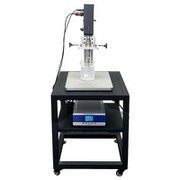
Ultrasonic Metal Welding Machine for Lithium-ion Batteries:
Lithium-ion battery metal spot welding machines, also known as ultrasonic metal spot welders (featuring three-point, four-point, single-point, or multi-point configurations), are advanced high-tech devices. They convert high-frequency electrical energy into mechanical vibration energy via a transducer, which is then applied to the workpieces. This generates high-frequency friction between the surfaces of the two workpieces until they heat up and fuse together. These machines are primarily used for welding the positive/negative electrode tabs to the battery terminals (tabs), tabs to the aluminium cover plate in lithium-ion batteries, as well as for multi-layer copper/aluminium foil to tab welding in polymer batteries. They also facilitate connections between aluminium and nickel strips, welding for nickel-metal hydride batteries, and welding of wires, copper, aluminium, silver-aluminium alloys, brass, red copper, bronze, nickel, and various electronic components. Furthermore, lithium-ion battery metal spot welding machines are commonly employed for welding the bottom of the lithium-ion battery aluminium case to aluminium-nickel composite strips, often equipped with dedicated fixtures.