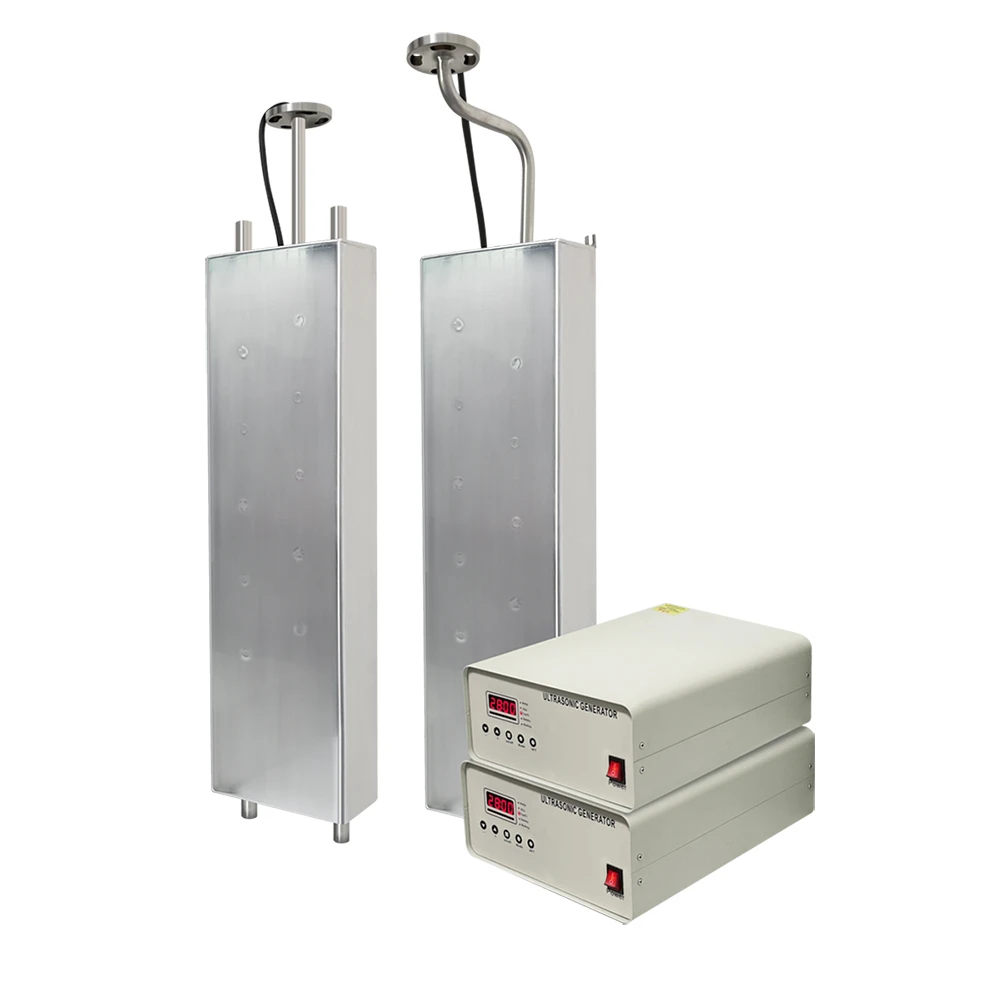
What Problems Arise From A Mismatch in The Frequency And Parameters Of An Immersible Ultrasonic Vibrating Plate?
Oct 10, 2026
1. Weak cavitation, poor cleaning results, and uneven cleaning
1) Energy conversion efficiency drops sharply; most of the generator's electrical output turns into heat rather than forming strong cavitation bubbles. Bubbles in the water are sparse and weak, creating the impression that "ultrasonic action is present, but cleaning is ineffective."
2) Sound field distortion occurs within the tank, creating large "dead zones" where some parts of the workpiece are cleaned while others remain untouched; yield rates for precision components (semiconductors, dental parts, 3D-printed items) fluctuate significantly.
3) Frequency shifts alter cavitation bubble size; a mismatch in both model selection and impedance matching can result in either excessive impact force damaging the workpiece or insufficient cavitation force to dislodge minute contaminants.
2. Generator anomalies and frequent protective shutdowns
1) Generator frequency lock-loss alarm: the automatic frequency tracking circuit fails to locate the resonance point and cuts off ultrasonic output. This manifests as a lack of ultrasonic activity upon startup-a symptom easily mistaken for a leaking transducer plate.
2) Abnormal current: no-load or load currents are too high or too low, preventing the system from reaching target power levels; slight mismatches cause unstable, fluctuating current readings.
3) Frequent triggering of overcurrent or overheat protection causes the system to shut down after only a few minutes of operation; older fixed-frequency generators lack automatic tracking, so any change in load (e.g., water temperature or workpiece quantity) exacerbates the impedance mismatch.
3. Overheating of transducer plates and transducers, accelerating permanent damage
1) Piezoelectric ceramic elements endure abnormal stress and generate excessive internal heat, causing rapid temperature rises in both the transducer plate and the cleaning fluid.
2) Prolonged impedance mismatch leads to issues such as piezoelectric ceramic cracking, element depolarization, thermal aging and debonding of the adhesive layer, and fatigue failure of transducer lead solder joints.
3) In multi-transducer plates, a frequency shift in a single transducer drags down the resonance of the entire plate; localized transducer overloading leads to sequential failures, eventually causing the entire plate to malfunction.
4.Internal power component burnout in the generator
In cases of impedance mismatch, the load impedance deviates significantly from the design value, subjecting power transistors, resonant capacitors, and inductors to abnormally high voltages and currents.
Short-term effects: Generator overheating and increased noise.
Long-term effects: Power transistor breakdown and fuse failure; repeated fuse blowing often leads customers to mistakenly suspect a short circuit in the transducer plate, when the actual cause is parameter mismatch.
5. Abnormal noise and vibration sounds
1) The tank emits a piercing shriek or irregular buzzing resonance, distinct from the uniform hissing sound of normal ultrasonic operation.
2) The transducer plate exhibits localized jitter rather than uniform, whole-body vibration; prolonged resonance accelerates fatigue and leakage at welds and seals.
6. Process instability; parameters drift with operating conditions
Changes in water temperature, cleaning solution concentration, or workpiece load can slightly alter the transducer plate's resonant frequency. In poorly matched systems, cleaning performance changes immediately when operating conditions shift:
Cleaning results are satisfactory in the morning but poor in the afternoon after the temperature rises; significant discrepancies in results occur for the same batch of workpieces depending on the load quantity.