


Ultrasonic Cell Disruption
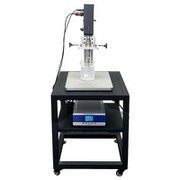
The ultrasonic cell disrupter is one of the commonly used equipment for laboratory sample preprocessing. It is suitable for crushing bacteria, cells, animal and plant tissue samples, etc. It can also be used for emulsification, homogenization, extraction, defoaming, preparation of nanomaterials, dispersion and acceleration of chemical reactions, etc....
Product Description:
The Ultrasonic Cell Disruption is one of the commonly used equipment for laboratory sample preprocessing. It is suitable for crushing bacteria, cells, animal and plant tissue samples, etc. It can also be used for emulsification, homogenization, extraction, defoaming, preparation of nanomaterials, dispersion and acceleration of chemical reactions, etc.
Products Specification:
| Model | Ultrasonic frequency | Ultrasonic power | Standard tool head 1/1 | Ultrasonic generator model | Ultrasonic transducer model | Dispersed capacity | duty cycle | Protective function |
| CQ28-P800 | 28KHZ±1KHZ | ≤500W | T28-D10L135 | 2900SP-CQ | JYD-3828-4P8-AU | ≤6L | 10%-100% | Over temperature/over power overtime/overload |
| CQ28-P1200 | 20KHZ±0.5KHZ | ≤600W | T28-D20L187 | 2900SP-CQ | JYD-5020-6P4-AU | ≤10L | 10%-100% | Over temperature/over power overtime/overload |
| CQ20-P2000 | 20KHZ±0.5KHZ | ≤1200W | T20-D30L490 | 2900SP-CQ | JYD-5020-4P4-AU | ≤30L | 10%-100% | Over temperature/over power overtime/overload |
| CQ20-P2600 | 20KHZ±0.5KHZ | ≤2000W | T20-D30L490 | 2900SP-CQ | JYD-5020-6P4-AU | ≤50L | 10%-100% | Over temperature/over power overtime/overload |
Main feature:
1. Automatic frequency tracking;
2. High-Q ultrasonic transducer with high ultrasonic conversion efficiency;
3. Adjustable operating time and ultrasonic pulse intervals;
4. High-quality titanium alloy probe with excellent corrosion resistance;
5. Protection functions for over-temperature, over-power, time-out, and overload conditions;
6. Intelligent MCU digital integrated circuitry;
7. Equipped with RS485 functionality for remote machine control;
8. Housing designed with multiple heat dissipation vents to prevent overheating during experiments, which could otherwise lead to data errors.

Applicable industries:
1.Life Sciences and Biotechnology: Extracting proteins, DNA/RNA, and enzymes; disrupting E. coli, yeast, and animal/plant tissues; preparing DNA fragments for Chromatin Immunoprecipitation (ChIP), etc.
2.Biopharmaceuticals and Medicine: Extracting recombinant proteins and vaccine antigens from bacteria or cells; dispersing injectable drugs.
3.Environmental and Chemical Engineering: Lysing microorganisms in soil or water samples for environmental monitoring; assisting in the degradation of Chemical Oxygen Demand (COD) in wastewater; accelerating chemical reactions, emulsification, extraction, and other processes.
FAQ:
How do I prevent my sample from overheating?
1.Use Pulse Mode: Our ultrasonic processor features an adjustable pulse mode (e.g., 1-10 seconds on/off). By setting a short 'on' time and a longer 'off' time, you allow the sample to cool down between ultrasonic bursts. A typical setting is 5 seconds on, 5 seconds off.
2.Operate in an Ice Bath: Place your sample container in an external ice bath, salt-ice bath, or chilled water jacket. This is the most effective method for heat-sensitive samples like proteins or RNA.
3.Control the Amplitude/Power: Use the lowest effective amplitude or power setting that still achieves the desired disruption. Running at full power for extended periods generates unnecessary heat.
What are the benefits of your control system?
1. Automatic frequency tracking maintains optimal performance as load conditions change;
2.Store up to 10 or more user-defined programs for different sample types;
3.One-touch recall of stored protocols ensures perfect reproducibility across experiments;
4.Built-in data logging records operating parameters for each run (time, power, temperature).
For more details of Ultrasonic Cell Disruption, please feel free to contact us!


Send Inquiry
