


Ultrasonic Cell Crush
Ultrasonic cell crush device is a good method of cell decomposition. Therefore, the mechanical effect of ultrasound provides faster and more complete solvent permeability and improves the transmission quality. Ultrasound can better penetrate into plant tissue and improve quality transmission. The cavitation effect caused by ultrasound can destroy the cell wall and significantly improve the extraction of effective components.
Ultrasonic cell crush device is a good method of cell decomposition. Therefore, the mechanical effect of ultrasound provides faster and more complete solvent permeability and improves the transmission quality. Ultrasound can better penetrate into plant tissue and improve quality transmission. The cavitation effect caused by ultrasound can destroy the cell wall and significantly improve the extraction of effective components.
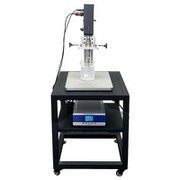
Ultrasonic cell crusher is a multi-function and multi-purpose instrument that uses ultrasonic wave to produce cavitation effect in liquid. It can be used for the crushing of various animal and plant cells, virus cells, bacteria and tissues, as well as the crushing and compounding of various inorganic materials. At the same time, it can be used for emulsification, separation, homogenization, extraction, defoaming, cleaning and accelerating chemical reactions.
Product application:
Ultrasonic cell crush technology has been widely used in the teaching, research and production of biochemistry, microbiology, pharmacology, physics, zoology, agriculture, medicine, pharmacy and other fields.
Products Specification:
| Model | Ultrasonic frequency | Ultrasonic power | Standard tool head 1/1 | Ultrasonic generator model | Ultrasonic transducer model | Dispersed capacity | duty cycle | Protective function |
| CQ28-P800 | 28KHZ±1KHZ | ≤500W | T28-D10L135 | 2900SP-CQ | JYD-3828-4P8-AU | ≤6L | 10%-100% | Over temperature/over power overtime/overload |
| CQ28-P1200 | 20KHZ±0.5KHZ | ≤600W | T28-D20L187 | 2900SP-CQ | JYD-5020-6P4-AU | ≤10L | 10%-100% | Over temperature/over power overtime/overload |
| CQ28-P2000 | 20KHZ±0.5KHZ | ≤1200W | T20-D30L490 | 2900SP-CQ | JYD-5020-4P4-AU | ≤30L | 10%-100% | Over temperature/over power overtime/overload |
| CQ28-P2600 | 20KHZ±0.5KHZ | ≤2000W | T20-D30L490 | 2900SP-CQ | JYD-5020-6P4-AU | ≤50L | 10%-100% | Over temperature/over power overtime/overload |

Precautions for using Ultrasonic Cell Crush:
1. Remember to leave the machine empty (the ultrasonic horn must be inserted into the sample before starting the machine)
2. The depth of the horn (ultrasonic probe) entering the water: about 1.5Cm. The liquid level should be above 30mm. The probe should be centered and not attached to the wall. Ultrasonic waves are vertical longitudinal waves. If they are inserted too deep, they will not easily form convection, which will affect the crushing efficiency.
3. Ultrasonic parameter setting: Set the key to set the instrument working parameters (see the manual for specific settings)
4) Time: The ultrasonic time should not too long time each time, and the gap time should be greater than or equal to the ultrasonic time to facilitate heat dissipation. The time setting should be based on the principle of short ultrasound time and high number of ultrasounds, which can extend the life of the ultrasound machine and probe.
5) Container selection: Choose as large a beaker as there are samples. This will also help the sample convection in the ultrasonic and improve the crushing efficiency. For example, for a processing capacity of 20ML, it is best to use a 20ML beaker.
6. Daily maintenance: After use, wipe the probe with alcohol or use clean water for ultrasound!
FAQ:
Q:Should we choose direct or indirect ultrasonic disruption for cell disruption?
Both direct and indirect crushing are possible, and the choice depends on the specific application. Direct disruption requires immersing the probe into the sample container and can handle most samples quickly and efficiently. Indirect crushing does not require a direct connection between the probe and the sample.
touch, allowing the user to handle sealed test tubes and vials. The angular cup is an accessory for indirect crushing.
Q:What about working principle of Ultrasonic Crusher?
The ultrasonic disruptor generates ultrasonic energy and conducts the energy to the liquid sample through a titanium probe. This process leads to cavitation (the collapse of microbubbles under high shear forces), which can
Can be used to process samples in many scientific applications. Small sample volumes require microprobes and lower energy input
out. Larger sample volumes require larger probes and higher energy output.
For more details of ultrasonic cell crush, please feel free to contact us!


Send Inquiry
