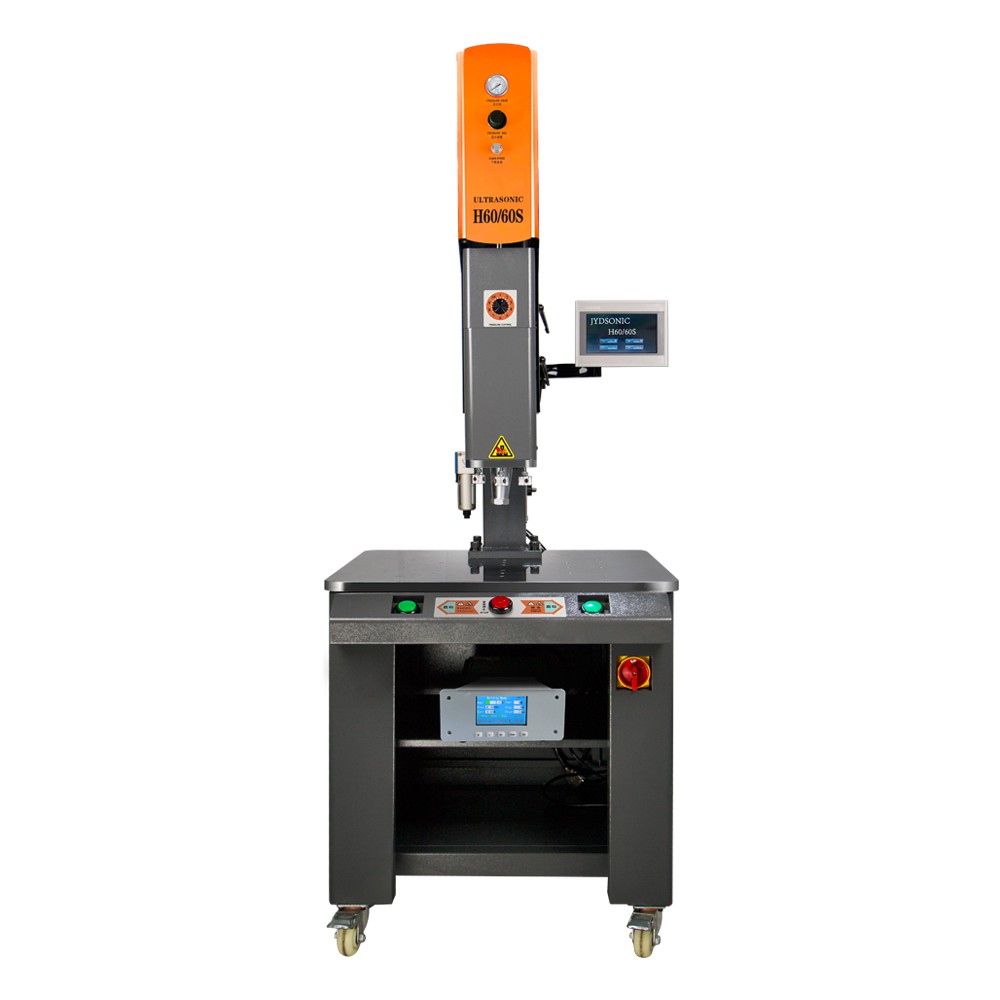
The Power of Ultrasonic Welding Equipment Has Significant and Multifaceted Impacts on Welding Quality
May 20, 2026
1. Welding Strength
Sufficient Power Ensures a Robust Weld:The magnitude of power is directly correlated with welding energy. When power reaches an appropriate level, it generates sufficient ultrasonic vibration energy to induce intense intermolecular friction within the materials being welded. This, in turn, causes the materials at the welding interface to melt and fuse completely. For instance, when welding relatively thick thermoplastic plastics (such as PP plastic sheets with a thickness of 5–10 mm), higher power ensures that the plastic within the welding zone melts more thoroughly. This results in the formation of a robust weld joint, ensuring that the welding strength meets the requirements of practical applications.
**Insufficient Power Leads to Poor Welding Strength:** If the power output is insufficient, the materials at the welding interface cannot acquire enough energy to achieve effective intermolecular fusion. This may result in a "cold weld" (or weak bond) at the joint, causing the welded area to separate easily when subjected to external forces. For example, when welding certain plastic automotive interior components that require high structural strength, if the ultrasonic welding equipment lacks sufficient power, these components may suffer from weld joint cracking during the installation process or during daily use (e.g., due to vibrations or impacts).
2. Welding Speed
High Power Accelerates the Welding Process:Appropriately increasing the power output can accelerate the welding speed. This is because higher power enables the material to reach its melting state within a shorter timeframe, thereby reducing the total time required for the welding operation. Taking the welding of small plastic toy parts as an example: when the equipment operates at a higher power setting, a single weld point might be completed in just 0.1 to 0.3 seconds. Conversely, under identical material and welding conditions, if the power is lower, the same welding operation could take 0.5 to 1 second-or even longer-to complete. In the context of large-scale manufacturing, this capability can significantly boost production efficiency.
Excessively Low Power Impedes Production Efficiency:Insufficient power slows down the welding process, which, in a batch production environment, leads to a decline in overall production efficiency. Furthermore, prolonged welding times can have detrimental effects on the material's properties-such as causing the material to overheat, resulting in deformation or degradation of its performance characteristics.
3. Welding Appearance Quality
Appropriate Power Maintains a Superior Appearance:When ultrasonic welding is performed at an appropriate power level, it ensures that the materials at the welding interface melt and fuse uniformly. This helps to maintain a flat, smooth, and aesthetically pleasing finish at the welded joint. For instance, when welding products with strict aesthetic requirements-such as the housings of electronic devices-selecting an appropriate power level is crucial for preventing issues that compromise visual quality, such as excessive weld marks, material overflow, or surface deformation.
Aesthetic Defects Caused by Excessive Power: If the power output is too high, it may lead to excessive melting of the material, resulting in "overflow"-a phenomenon where burrs or accumulations of excess material form around the weld joint. Furthermore, excessive power can cause localized overheating of the material, leading to deformation within the weld zone and thereby compromising the product's overall aesthetic appeal and dimensional accuracy.
4. Material Compatibility
Matching Power to Specific Materials: Different materials impose varying requirements on the power output of ultrasonic welding equipment due to their distinct physical properties (such as melting point, hardness, etc.). Materials characterized by high melting points and greater hardness (such as certain engineering plastics or metals) necessitate higher power levels to achieve an effective weld. For example, welding metallic materials (such as aluminum or copper alloys) typically requires significantly higher power than welding common plastics; this is because metals possess higher melting points and superior thermal conductivity, demanding sufficient energy to overcome their interatomic forces and facilitate fusion at the weld interface.
The Impact of Power Mismatch on Weld Quality: A mismatch between the power output and the material-whether the power is too high or too low-will inevitably compromise the quality of the weld. When dealing with softer materials that have lower melting points, applying excessive power can damage the structural integrity of the material itself; conversely, for harder materials with higher melting points, insufficient power will render it impossible to achieve a robust and effective weld.