

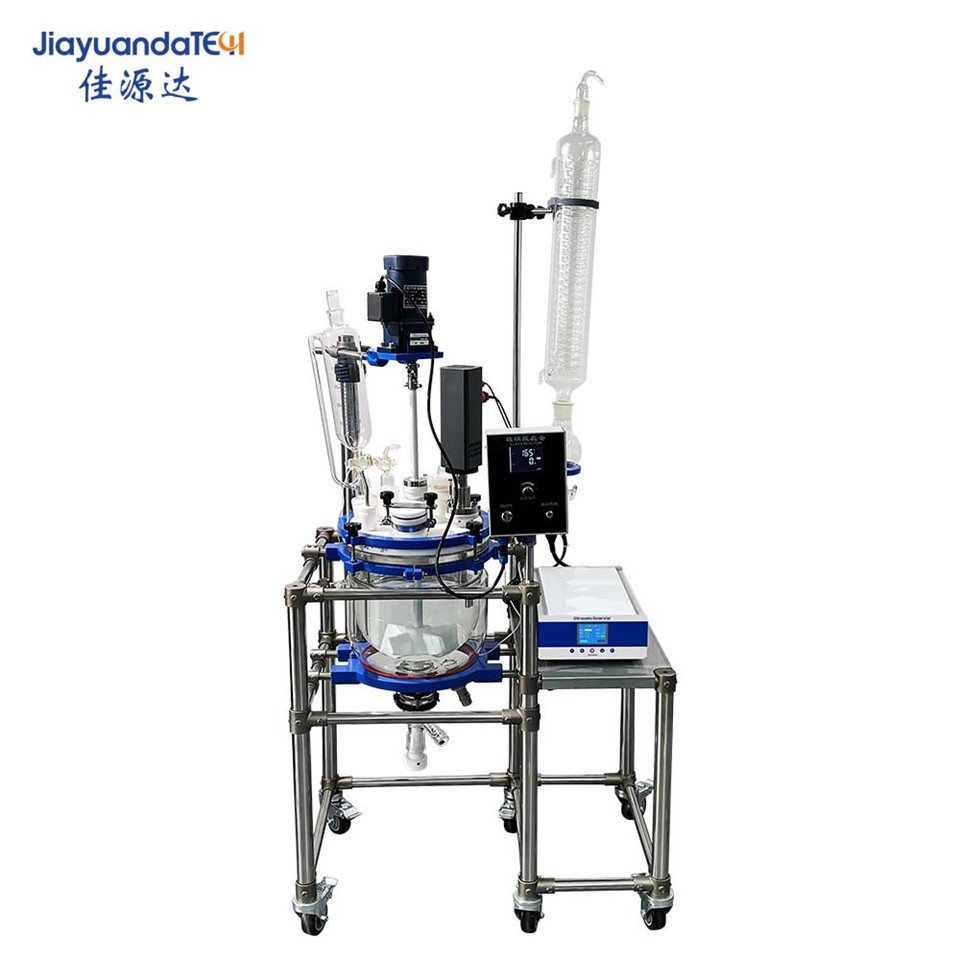

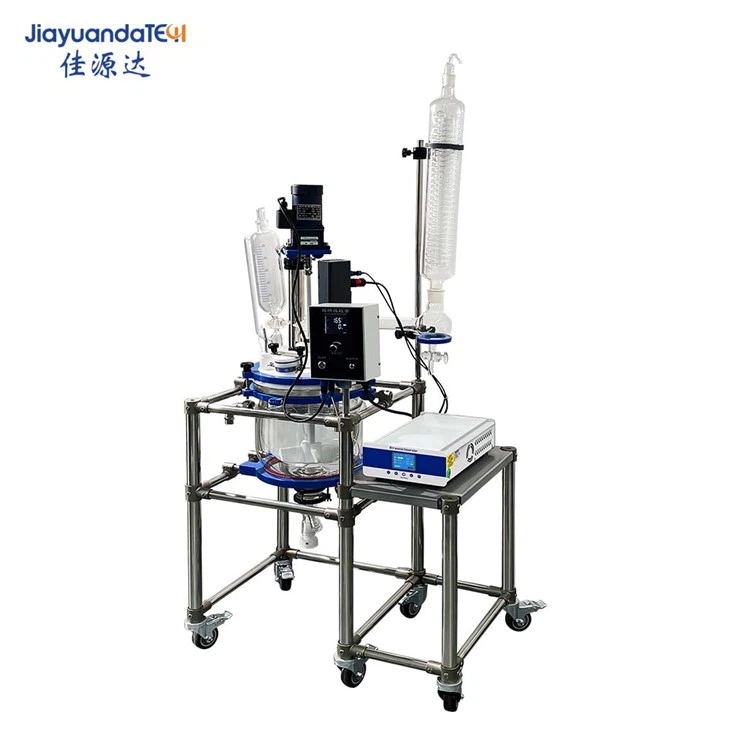
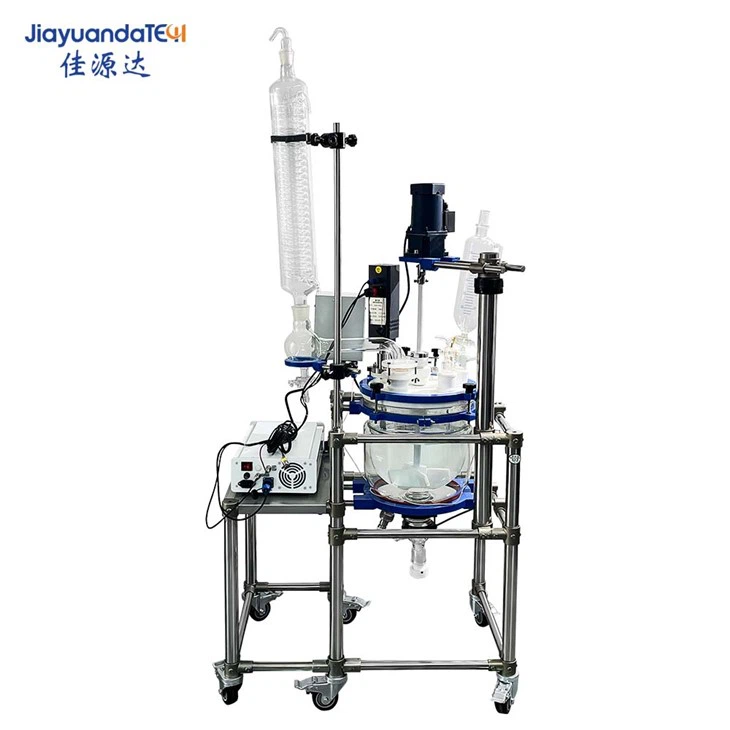
Ultrasonic Jacketed Glass Reactor
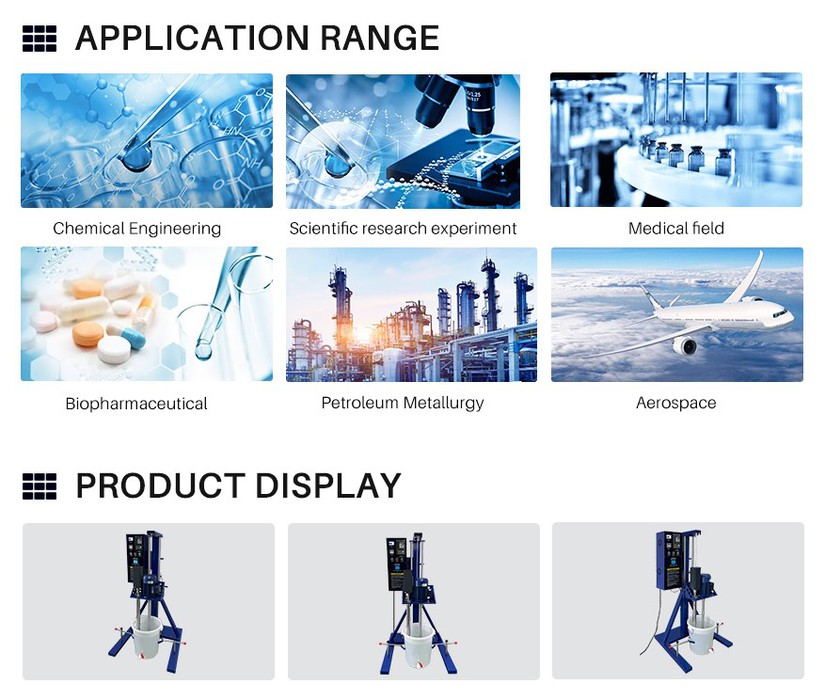
An ultrasonic jacketed glass reactor promotes reactant mixing. The stirring effect of ultrasound achieves better mixing of reactants, improving the uniformity of reaction products. An ultrasonic reactor also enhances catalytic effects. Ultrasound activates material surfaces, accelerating catalytic reactions. It is suitable for various chemical reactions, such as emulsification, homogeneous reactions, and esterification. Furthermore, it improves extraction efficiency. In the pharmaceutical industry, ultrasonic vibrations break down cell walls, accelerate dissolution, and enhance the extraction efficiency of active ingredients.
Product description:
Ultrasound consists of high-frequency vibration waves that generate pressure waves and shear forces in materials, promoting reaction rates and the solubility of reactants. When applied to a glass reactor, ultrasound increases the kinetic energy of liquid molecules, enhancing reactant mixing and dissolution. It accelerates reaction rates, improves product particle size distribution and crystallization processes, while reducing reaction temperature and time. Additionally, ultrasound increases the surface area of materials involved in the reaction, making it easier for catalysts and other reactants to adsorb and participate.
An ultrasonic jacketed glass reactor promotes reactant mixing. The stirring effect of ultrasound achieves better mixing of reactants, improving the uniformity of reaction products. An ultrasonic reactor also enhances catalytic effects. Ultrasound activates material surfaces, accelerating catalytic reactions. It is suitable for various chemical reactions, such as emulsification, homogeneous reactions, and esterification. Furthermore, it improves extraction efficiency. In the pharmaceutical industry, ultrasonic vibrations break down cell walls, accelerate dissolution, and enhance the extraction efficiency of active ingredients.
Product parameter:
| Product Name | Ultrasonic Reactor | Reaction bottle volume | 10L |
| Glass material | GG-3.3 | Number of Lid Openings | Six mouths |
| Mezzanine capacity | 6L | Reactor reaction temperature | -80-250℃ |
| Vacuum degree | 0.098MPA | Stirring speed | 0~600rpm |
| Mixing shaft diameter | 16mm | Agitation power | 120W |
| Voltage | 220V/50Hz | Overall dimensions | 520×520×2000(mm) |
| Package weight | 70kg | Package dimensions | 1350×600×800(mm) |
| FUNCTION CONFIGURATION | |||
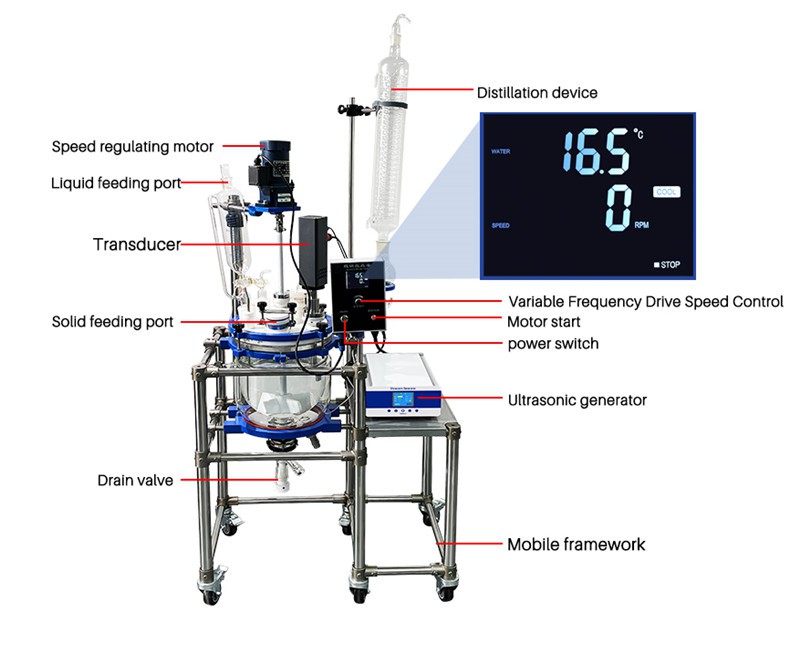
| Speed regulation method | variable frequency speed control | ||
| Motor configuration | Low speed booster motor, speed ratio 1:3 | ||
| Speed display mode | Digital display | ||
| Digital display | PT100 sensor, digital display | ||
| Mixing and sealing method | Mechanical PTFE component seal+ceramic bearing, 50 flange mixing port | ||
| Condenser | Vertical high-efficiency double reflux condenser tube 85 * 650mm | ||
| Reflux (distillation) device | Reflux elbow with discharge switch, 50 # ball mill port | ||
| Dropping device | 1-liter constant pressure funnel 40 # label | ||
| Pressure reducing device | 34 #standard pressure reducing valve | ||
| Feeding method | Oblique discharge type, top needle type glass discharge valve, 8 80 flange port | ||
| Mixing connection method | Universal joint connection | ||
| Stirring rod | Stainless steel rod (described or spiral), wrapped with PTFE | ||
| Reactor rack | Mobile framework | ||
| Vessel Body and Cover Fastener | Fixing parts for kettle body and kettle cover | ||
| Pot body tray | A set | ||
| ULTRASONIC CONFIGURATION | |||
| Operating frequency | 27.8±0.8KHz | Working Voltage | 220V±10% |
| Ultrasonic power | 800-1200W | Working diameter | 100kg |
Ultrasonic Jacketed Glass Reactor Features:
1. Borosilicate glass jacketed design supports precise temperature control from -80°C to 300°C. The 5-7mm thick glass resists sudden temperature changes.
2. 265mm large-bore opening facilitates easy feeding and cleaning. The 304L stainless steel stand is stable and movable.
3. 300N·cm high-torque motor with digital variable frequency speed control (600 rpm), connected via a universal joint.
4. The lid is designed with five standard ports: 50# (stirring), 34# (serpentine condenser), 34#1 (exhaust valve), 40# (constant pressure funnel), and C36 flange port (temperature measurement).
5. Stainless steel/PTFE composite stirring shaft with precise mechanical seal, good airtightness, no air leakage, and excellent chemical resistance.
6. Removable PTFE needle tip suitable for solid/high-viscosity materials, completely residue-free.
FAQ:
What is the main advantage of the ultrasonic jacketed glass reactor?
1. Excellent Temperature Control Capability
The jacketed design allows rapid heating and cooling, making it suitable for temperature-sensitive reactions such as polymerization and crystallization processes.
2. Good Chemical Stability
Borosilicate glass resists acids, alkalis, and organic solvents, making it suitable for most chemical experiments.
3. Visual Operation
The transparent glass material allows easy observation of the reaction status, including color changes, precipitate formation, and more.
4. Safe and Reliable
The double-layer structure reduces the risk of glass breakage caused by thermal shock.
Magnetic stirring avoids leakage issues associated with mechanical seals.
What applications is this ultrasonic jacketed glass reactor suitable for?
Organic Synthesis: Such as esterification, condensation, hydrogenation, and other reactions.
Pharmaceutical Industry: Preparation of drug intermediates, crystallization, and purification.
Cosmetics: Flavor extraction and emulsification reactions.
Material Science: Nanomaterial synthesis and polymer polymerization.


Send Inquiry
