


Ultrasonic Beaker Extraction
1.Stable output power;
2.3.4-inch touch screen;
3.Overload protection;
4.Customizable probe;
5.Designed for laboratory.
Product Description:
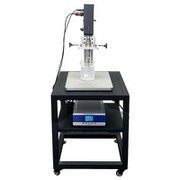
The Ultrasonic beaker extraction machine mainly consists of three components: an ultrasonic generator, a transducer, and a horn. Among them, the ultrasonic generator is the core of the system, generating high-frequency current to convert electrical energy into mechanical ultrasonic energy. The transducer converts the ultrasonic energy produced by the generator into vibrations and transmits them to the horn, which further amplifies the amplitude to achieve the desired level.
Ultrasonic beaker extraction is an efficient, rapid, and gentle method that uses ultrasonic energy and is widely applied in fields such as biomedicine, materials science, and food science. Compared with traditional extraction methods, it offers advantages including high efficiency, energy savings, and environmental friendliness, making it a popular choice in laboratories.
In laboratory settings, the ultrasonic beaker extraction machine uses ultrasonic vibrations to rapidly agitate the molecules of the extraction solvent, thereby accelerating the separation of target compounds from the sample. At the same time, ultrasonic cavitation helps disrupt cell walls, making it easier to extract the desired components. As this process is carried out at room temperature, it does not alter the structure of the target compounds, ensuring the quality of the extract.
Product Parameter:
| Product Model | Frequency | Ultrasonic power | Probe diameter | Length | Pocessing capcity | Power requlation | Protection function |
| EQ300/EQ300SPB | 28KHz±1KHz | ≤900W | ∅10mm | ≤105mm | 20-500ml | 20%-100% | Overtemperature, Overpower Overtime, Overload |
| 28KHz±1KHz | ≤900W | ∅12mm | ≤105mm | 30-600ml | 20%-100% | ||
| 28KHz±1KHz | ≤900W | ∅15mm | ≤105mm | 50-1200ml | 20%-100% | ||
| 28KHz±1KHz | ≤900W | ∅20mm | ≤105mm | 100-2000ml | 20%-100% | ||
| 28KHz±1KHz | ≤900W | ∅10mm | ≤108mm | 30-800ml | 20%-100% | ||
| 28KHz±1KHz | ≤900W | ∅12mm | ≤108mm | 50-1000ml | 20%-100% | ||
| 28KHz±1KHz | ≤900W | ∅15mm | ≤108mm | 100-1500ml | 20%-100% | ||
| 28KHz±1KHz | ≤900W | ∅20mm | ≤108mm | 100-2000ml | 20%-100% | ||
| EQ400/EQ400SPB | 20KHz±0.5KHz | ≤1200W | ∅10mm | ≤145mm | 30-800ml | 20%-100% | |
| 20KHz±0.5KHz | ≤1200W | ∅15mm | ≤145mm | 50-1200ml | 20%-100% | ||
| 20KHz±0.5KHz | ≤1200W | ∅20mm | ≤145mm | 100-2000ml | 20%-100% | ||
| 20KHz±0.5KHz | ≤1200W | ∅25mm | ≤145mm | 100-2500ml | 20%-100% | ||
| 20KHz±0.5KHz | ≤1200W | ∅10mm | ≤260mm | 100-1200ml | 20%-100% | ||
| 20KHz±0.5KHz | ≤1200W | ∅15mm | ≤260mm | 100-2000ml | 20%-100% | ||
| 20KHz±0.5KHz | ≤1200W | ∅20mm | ≤260mm | 100-3000ml | 20%-100% | ||
| 20KHz±0.5KHz | ≤1200W | ∅25mm | ≤260mm | 100-4000ml | 20%-100% | ||
| EQ700/EQ700SPB | 20KHz±0.5KHz | ≤2000W | ∅20mm | ≤145mm | 100-2000ml | 20%-100% | |
| 20KHz±0.5KHz | ≤2000W | ∅25mm | ≤145mm | 100-2500ml | 20%-100% | ||
| 20KHz±0.5KHz | ≤2000W | ∅30mm | ≤145mm | 100-4000ml | 20%-100% | ||
| 20KHz±0.5KHz | ≤2000W | ∅30mm | ≤145mm | 100-5000ml | 20%-100% | ||
| 20KHz±0.5KHz | ≤2000W | ∅20mm | ≤260mm | 100-3000ml | 20%-100% | ||
| 20KHz±0.5KHz | ≤2000W | ∅25mm | ≤260mm | 100-4000ml | 20%-100% | ||
| 20KHz±0.5KHz | ≤2000W | ∅30mm | ≤260mm | 100-5000ml | 20%-100% | ||
| 20KHz±0.5KHz | ≤2000W | ∅40mm | ≤260mm | 100-10000ml | 20%-100% |
Ultrasonic Beaker Extraction Machine Features:
1.Delivers strong performance in extraction, homogenisation, emulsification and mixing;
2.Features a 4.3-inch intelligent touchscreen display;
3.Offers a choice of two modes: pulsed or continuous operation;
4.Allows users to create and store up to 20 operating programmes;
5. Includes overload protection, over-temperature protection, overtime protection, and overpower protection;
6. Effectively disrupts biological structures such as cells, bacteria, viruses, and spores;
7.Certified to CE, RoHS and FCC standards;
8.Comes with a one-year warranty.

Application:
1.Used for extracting active ingredients (such as polyphenols, flavonoids, alkaloids, essential oils, and pigments) from plants, herbs, seeds, etc., applied in phytochemical research and the cosmetics industry.
2.In the pharmaceutical industry, used for the extraction of active components from traditional Chinese medicine and for active pharmaceutical ingredient (API) pre-treatment.
3.In bioengineering, used for cell disruption and biomolecule extraction, including DNA/RNA extraction, protein release, and microbial cell lysis, among others.

FAQ:
1.What extraction efficiency can ultrasonic beaker extraction machine achieve?
Our laboratory ultrasonic extractor utilizes the cavitation effect to significantly enhance extraction efficiency. Compared with conventional methods such as maceration or Soxhlet extraction, it can typically increase extraction yield by 20–50% while reducing processing time by up to 70%.
The actual efficiency depends on factors such as sample type, solvent, ultrasonic power, and extraction time. For most applications-especially in phytochemistry, food science, and pharmaceutical science-ultrasonic extraction provides faster, more consistent, and higher-yield results, particularly for heat-sensitive or hard-to-extract compounds.
2.What is the typical particle size or extraction fineness?
Ultrasonic beaker extraction does not directly define or control particle size like milling equipment. Instead, it uses the cavitation effect to disrupt cell walls and enhance mass transfer, allowing solvents to penetrate more effectively and release intracellular compounds. In practice, this results in a more complete and efficient extraction rather than a specific particle size. For most applications, samples are typically pre-ground to 20–100 mesh to achieve optimal extraction performance. If required, ultrasonic systems can also assist in particle dispersion, helping achieve a more uniform and finer suspension, but they are not designed as primary particle size reduction equipment.
3.What is the processing capacity?
The processing capacity of an ultrasonic beaker extraction machine depends on the model, probe size, and power output. Typically, it ranges from small lab-scale volumes of 100–5000 mL to pilot-scale capacities of several liters per batch. For higher throughput needs, we also offer systems designed for continuous or semi-continuous processing, which can handle larger sample volumes efficiently. The optimal capacity depends on your specific application, sample type, and required extraction efficiency. Our team can recommend the most suitable configuration based on your process requirements to ensure consistent and reliable results.



Send Inquiry
