


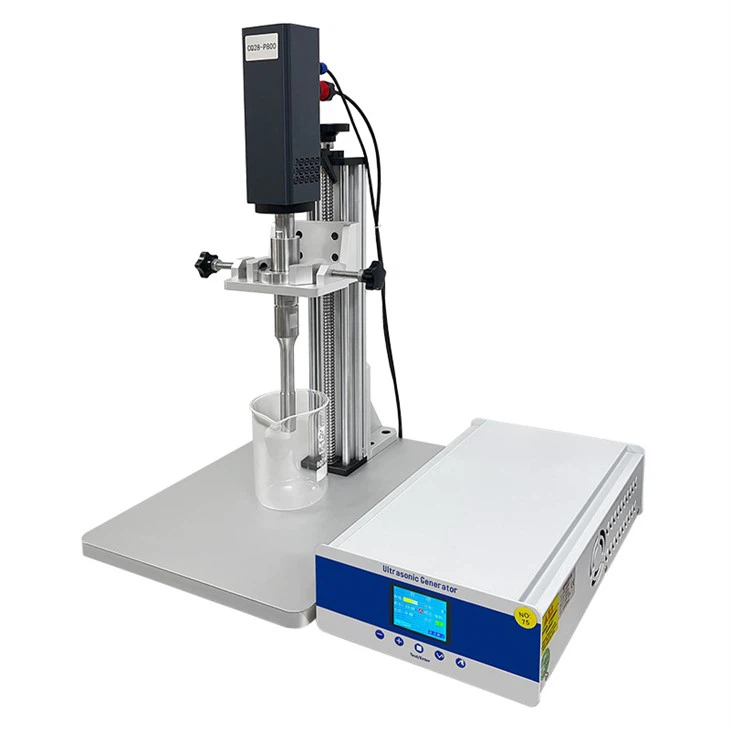
Ultrasonic Cell Processors
Ultrasonic cell processors are multifunctional, multipurpose instruments that utilise ultrasonic cavitation in liquids to process materials. They can be used to disrupt animal and plant tissues, cells, and bacteria, as well as for emulsification, separation, dispersion, homogenisation, extraction, cleaning, and accelerated dissolution. They are widely applied in fields such as biochemistry, microbiology, medicinal chemistry, surface chemistry, physical chemistry, and zoology.
Product Description:
Ultrasonic cell processors are multifunctional, multipurpose instruments that utilise ultrasonic cavitation in liquids to process materials. They can be used to disrupt animal and plant tissues, cells, and bacteria, as well as for emulsification, separation, dispersion, homogenisation, extraction, cleaning, and accelerated dissolution. They are widely applied in fields such as biochemistry, microbiology, medicinal chemistry, surface chemistry, physical chemistry, and zoology.
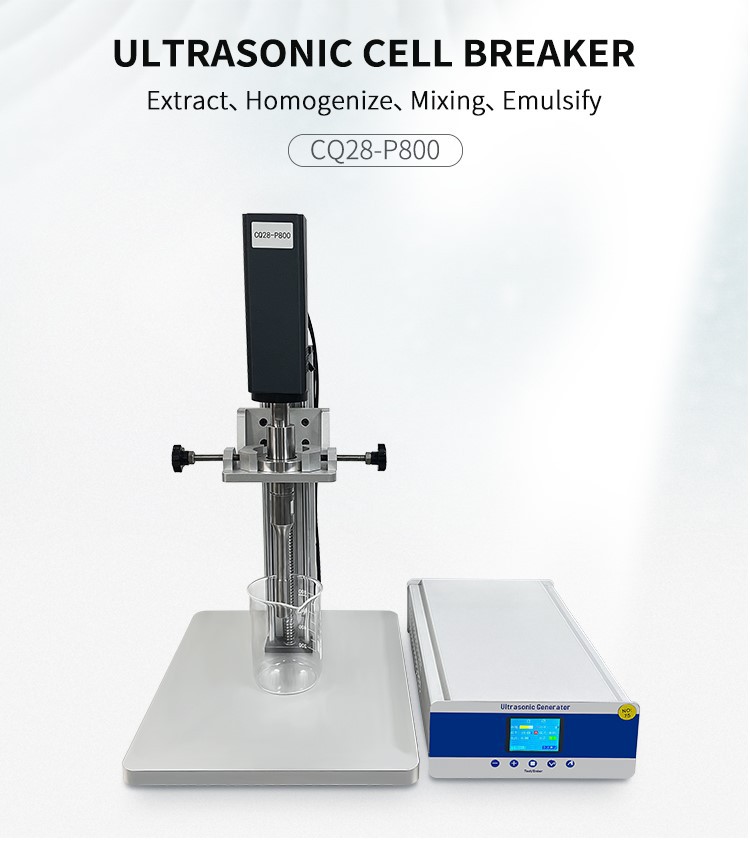
The ultrasonic cell processors consist of two main components: an ultrasonic generator and a transducer. The ultrasonic generator produces ultrasonic waves at specific frequencies, typically 20 kHz or 28 kHz. The ultrasonic transducer is an energy conversion device that converts high-frequency electrical energy into mechanical energy. The ultrasonic cell disruptor allows for flexible setting of ultrasonic duration, number of cycles, and other parameters.
Specification of Ultrasonic Cell Processors
| Model | Ultrasonic frequency | Ultrasonic power | Standard tool head 1/1 | Ultrasonic generator model | Ultrasonic transducer model | Dispersed capacity | duty cycle | Protective function |
| CQ28-P800 | 28KHZ±1KHZ | ≤500W | T28-D10L135 | 2900SP-CQ | JYD-3828-4P8-AU | ≤6L | 10%-100% | Overtemperature/over power overtime/overload |
| CQ28-P1200 | 20KHZ±0.5KHZ | ≤600W | T28-D20L187 | 2900SP-CQ | JYD-5020-6P4-AU | ≤10L | 10%-100% | Overtemperature/over power overtime/overload |
| CQ20-P2000 | 20KHZ±0.5KHZ | ≤1200W | T20-D30L490 | 2900SP-CQ | JYD-5020-4P4-AU | ≤30L | 10%-100% | Overtemperature/over power overtime/overload |
| CQ20-P2600 | 20KHZ±0.5KHZ | ≤2000W | T20-D30L490 | 2900SP-CQ | JYD-5020-6P4-AU | ≤50L | 10%-100% | Overtemperature/over power overtime/overload |
Product Features:
1. Intelligent automatic frequency tracking with real-time frequency following;
2. High-power ultrasonic transducer with low impedance and high energy conversion efficiency;
3. High-quality titanium alloy probe with excellent corrosion resistance;
4. PLC or RS485 control capability for remote machine operation;
5. Protection functions against abnormalities in frequency, power, and transducer current;
6. CE, RoHS, and FCC certified, meeting international standards.
Application:
1. Cell Disruption and Component Extraction: Used to extract intracellular bioactive substances such as proteins, enzymes, and nucleic acids, for example in cell disruption during insulin production.
2. Genetic Engineering: Disrupts cells to extract plasmid DNA or genomic DNA, supporting gene cloning and expression experiments.
3. Wastewater Treatment: Disrupts microbial cells to accelerate the decomposition of organic matter, improving wastewater treatment efficiency.
FAQ:
Can the process be precisely controlled?
Yes, the ultrasonic cell processors offer precise and flexible process control to ensure consistent and reproducible results. They allow users to adjust key parameters such as processing time, and pulse mode (on/off cycles) to suit different sample types and experimental needs. These controls help optimize cell disruption efficiency while minimizing heat generation from the cavitation effect, ensuring better protection of sensitive biomolecules.
How do you prevent overheating during operation?
Overheating is effectively controlled through a combination of system design and operational settings. Our ultrasonic cell processors use the cavitation effect, which can generate heat during operation, but this is managed in several ways:
Pulse mode operation (on/off cycles) to reduce continuous heat buildup
Adjustable processing time for precise energy input control
External cooling methods, such as an ice bath
These features help maintain low and stable temperatures, ensuring efficient cell disruption while protecting heat-sensitive biomolecules like proteins and nucleic acids.
For more details on Ultrasonic Cell Processors, please feel free to contact us!




Send Inquiry
