


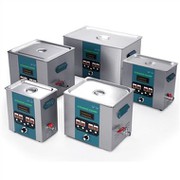
Glasses Optical Ultrasonic Cleaner
Glasses optical ultrasonic cleaner is mainly used in cleaning of glass lenses, resin lenses, microscopes, telescopes, camera lenses, coated glass, prisms, lenses and other optical products before and after coating and assembly. In the optoelectronic industry, it is mainly used in ITO conductive glass , LCD substrate cleaning, cleaning of residual liquid crystal after liquid crystal chip packaging.
Cleaning operation specifications of Glasses Optical Ultrasonic Cleaner
The first thing to pay attention to is the liquid level standard (do not turn on if the liquid level is below the standard). Due to the different cleaning tank capacities of the ultrasonic oscillator, there are also certain differences in liquid level requirements. Before using the ultrasonic oscillator, it is necessary to carefully read the instruction manual, understand the minimum tank depth and liquid level depth in detail, and do not connect the power supply when the liquid level is not up to the standard or there is no liquid, as this may cause damage to the oscillator.
Secondly, pay attention to the type of cleaning agent (do not choose corrosive products). The ultrasonic oscillator can be cleaned with pure water, or with water and cleaning agent for better cleaning effect. For different workpieces, the selection of cleaning agent should be particularly careful. Firstly, cleaning agents should not cause corrosion or damage to the oscillator body, and should also meet the cleaning requirements of the workpiece. It is important to pay attention to temperature changes in the properties of cleaning agents. Some cleaning agents have poor temperature resistance and may corrode the oscillator after high temperatures, so it is necessary to avoid using such cleaning materials.
Thirdly, pay attention to the peak temperature (manual startup is prohibited during peak hours). Most high-quality ultrasonic oscillators have a self-protection function, which can protect the safety of the equipment. When used for a long time, the internal temperature of the oscillator will increase exponentially. At this time, the automatic temperature detection system of the equipment will send a signal, causing the equipment to immediately shut down and be in a dormant state. At this time, manual startup is prohibited to avoid permanent damage to the equipment due to poor heat removal.
Fourth, pay attention to the cleaning of the inner groove (to prevent affecting the next batch of workpieces). Generally speaking, professional ultrasonic oscillators should not work too frequently and intermittently. It is important to thoroughly clean the inner groove to prevent dirt in the workpieces from corroding the inner liner, and also to avoid the impact of cleaning agents on other workpieces. So in principle, after using different ultrasonic oscillator cleaning agents for different types of workpieces, the liquid in the inner groove should be discharged and thoroughly cleaned before cleaning the next wave of workpieces.
Products Parameter:
|
Model |
Internal Dimensions (L*W*H) |
External Dimensions (L*W*H) |
Volume(L) |
Gross Weight(Kg) |
Ultrasonic Power(W) |
Heating Powery(W) |
Drain valve |
Frequency(KHz) |
Time(Min) |
Heating Temperature(℃) |
|
UC-7120 |
240*135*100 |
268*170*243 |
3.2 |
4.77 |
120 |
100 |
no |
40 |
1-60 |
30~80 |
|
UC-7120L |
240*135*150 |
268*170*290 |
5 |
5.4 |
120 |
200 |
||||
|
UC-7120-T |
240*135*100 |
268*170*290 |
3.2 |
6.7 |
120 |
200 |
yes |
|||
|
UC-7180 |
300*150*100 |
325*178*243 |
4.8 |
5.65 |
180 |
200 |
no |
|||
|
UC-7180L |
302*150*150 |
325*178*290 |
6.8 |
6.2 |
180 |
200 |
no |
|||
|
UC-7180-T |
300*150*100 |
325*178*290 |
4.5 |
7.5 |
180 |
200 |
yes |
|||
|
UC-7240L |
300*240*150 |
368*270*290 |
11 |
8.5 |
240 |
300 |
yes |
|||
|
UC-7360 |
330*300*150 |
397*320*317 |
15 |
11.5 |
360 |
400 |
yes |
|||
|
UC-7360L |
330*300*200 |
397*320*368 |
20 |
12.5 |
360 |
400 |
yes |
|||
|
UC-7480 |
500*300*150 |
560*320*317 |
22 |
14.5 |
480 |
500 |
||||
|
UC-7600 |
500*300*200 |
560*320*385 |
30 |
16 |
600 |
500 |
yes |
|||
|
UC-7600T |
28 | |||||||||

FAQ:
What about the technology of Glasses Optical Ultrasonic Cleaner?
Different processes in optical lens processing should have different cleaning processes. From the overall process, it can be divided into four processes: washing, rinsing, dehydration and drying.
Washing: it mainly uses organic solvents such as trichloroethylene to dissolve the hanging plate glue, wax, mold inhibitor, etc. to achieve the purpose of pre washing, and then uses the detergent to wet, penetrate and emulsify the lens surface.
Rinsing: the detergent that is loose on the lens surface after washing is separated from the lens surface by washing the lens surface with clean water and ultrasonic action.
Dehydration: the rinsed lens surface contains a large amount of water, which enters the dehydrating agent for dehydration. The dehydrating agent is mostly organic solvent and can be fully miscible with water.
Drying: the drying agent shall have similar boiling point and good mutual solubility with the dehydrating agent.
For more details of Glasses Optical Ultrasonic Cleaner, please feel free to contact us!




Send Inquiry
