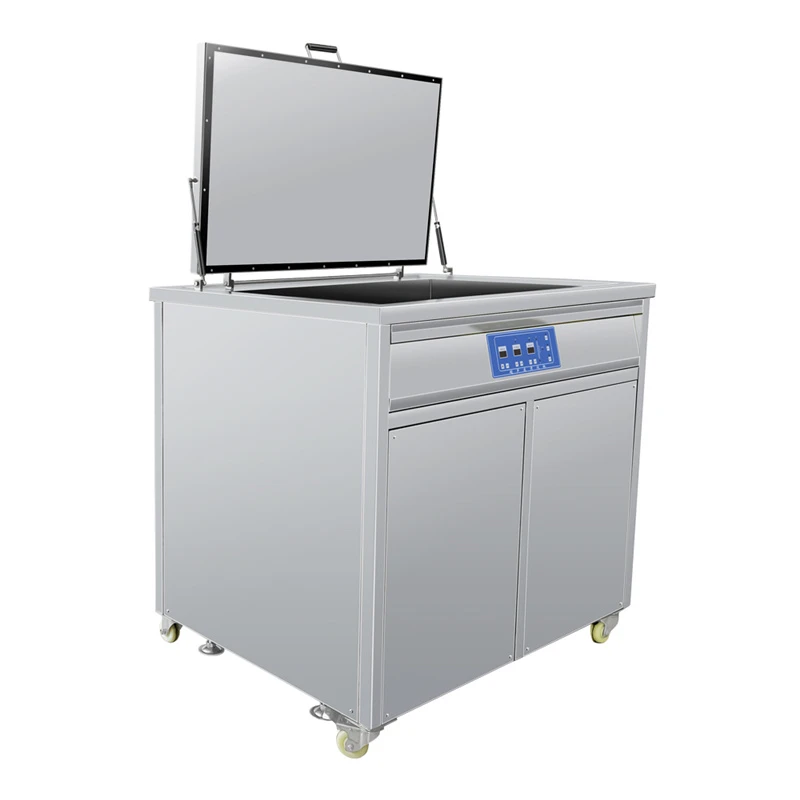
Why can't ultrasonic cleaners wash clothes?
Dec 03, 2025
1. A severe mismatch between cleaning efficiency and the volume of clothing
The capacity of a typical ultrasonic cleaner is usually between 0.5 and 10 liters, while washing a single ordinary T-shirt requires at least 20 liters of water. More importantly, the energy of ultrasonic waves attenuates rapidly in water. Experimental data shows that in a standard ultrasonic cleaner, the effective cleaning range is typically no more than 15-20 centimeters from the transducer surface. This means:
Only the portion of clothing closest to the transducer can be effectively cleaned;
The inside of folded or stacked clothing receives almost no cleaning;
Uneven cleaning can result in mottled cleaning marks on clothing;
2. Potential Damage to Fabric Fibers
The textile fibers of clothing are fundamentally different from the hard materials typically handled by ultrasonic cleaners:
Natural fibers (such as cotton and wool): These fibers are soft and elastic, and prolonged exposure to cavitation effects can cause them to break;
Synthetic fibers (such as polyester and nylon): Although they are strong, repeated ultrasonic waves can damage their structure;
Specially treated fabrics: Waterproof coatings, elastic fibers, and other special treatments may become ineffective under ultrasonic waves;
3. Limitations in Actual Cleaning Effectiveness
Ultrasonic cleaners excel at removing firmly attached particulate stains, but their effectiveness on common stains on clothing is limited:
Oil stains: Require the emulsifying effect of surfactants; ultrasonic waves alone are ineffective;
Protein stains: Such as blood and milk stains, require enzymatic decomposition;
Pigment stains: Such as red wine and coffee stains, require chemical bleaching agents.