


Ultrasonic Cell Breaker
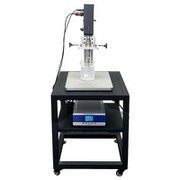
The ultrasonic cell breaker converts electrical energy into sound energy through a ultrasonic transducer, and this energy passes through the liquid medium and becomes dense small bubbles. The role of substances such as broken cells
Ultrasonic Cell Breaker (also known as ultrasonic disruptor phacoemulsifier) is a commonly used laboratory equipment that is widely used in research and experiments in the fields of cytology, biochemistry, molecular biology and other fields to extract intracellular Biomolecules such as proteins, nucleic acids, enzymes, etc., as well as broken cell structures for cell component analysis, etc., are also suitable for particle dispersion, dissolution and other scientific applications.
Specification of Ultrasonic Cell Breaker
| Model | Ultrasonic frequency | Ultrasonic power | Standard tool head 1/1 | Ultrasonic generator model | Ultrasonic transducer model | Dispersed capacity | duty cycle | Protective function |
| CQ28-P800 | 28KHZ±1KHZ | ≤500W | T28-D10L135 | 2900SP-CQ | JYD-3828-4P8-AU | ≤6L | 10%-100% | Over temperature/over power overtime/overload |
| CQ28-P1200 | 20KHZ±0.5KHZ | ≤600W | T28-D20L187 | 2900SP-CQ | JYD-5020-6P4-AU | ≤10L | 10%-100% | Over temperature/over power overtime/overload |
| CQ20-P2000 | 20KHZ±0.5KHZ | ≤1200W | T20-D30L490 | 2900SP-CQ | JYD-5020-4P4-AU | ≤30L | 10%-100% | Over temperature/over power overtime/overload |
| CQ20-P2600 | 20KHZ±0.5KHZ | ≤2000W | T20-D30L490 | 2900SP-CQ | JYD-5020-6P4-AU | ≤50L | 10%-100% | Over temperature/over power overtime/overload |

Steps for usage
1. Put the transducer connected to the horn into the special jack on the top of the soundproof box, and then connect the power cord to the power input interface on the back of the host; and connect the host power cord.
2. Set the "ultrasonic time, gap time, and number of operations". Generally, the ultrasonic time should not be turned on too long and should be controlled within 1-5 seconds. During operation, the gap time should be greater than the working time for experiments.
3. Select the appropriate container (test tube, beaker and centrifuge tube) according to the sample amount. After fixing it, adjust the lifting platform in the soundproof box to determine the height position, insert the end of the horn into the sample liquid level 1-1.5cm and make it At the center of the container, the horn must not be in contact with the container wall; the end of the horn should generally be greater than 30mm away from the container. When the measurement is small and the power is turned on, it can be greater than 10mm (depending on the container).
4. After powering on, the power indicator light comes on. Press the protection reset button and the work reset button again.
FAQ:
Cell fragmentation method
1. High speed tissue fragmentation:
Mix the materials into a dilute liquid and place it in a measuring cylinder of approximately 1/3 volume. Cover the cylinder tightly and turn the speed controller to the slowest position. After turning on the switch, gradually accelerate to the desired speed. This method is applicable to animal visceral tissues, plant fleshy seeds, etc.
2. Glass homogenizer:
Firstly, place the cut tissue into a tube and then insert it into a grinding rod to grind back and forth. By moving up and down, cells can be crushed. This method has a higher degree of cell fragmentation than high-speed tissue crushers and is suitable for small amounts of animal organ tissues.
3. Ultrasonic Cell Breaker:
Using a certain power of ultrasound to treat cell suspension can cause rapid shock and rupture of cells. This method is most suitable for microbial materials. Using Escherichia coli to prepare various enzymes, a concentration of 50-100 milligrams of bacterial body/milliliter is often chosen. The treatment frequency is from 1KG to 10KG, lasting for 10-15 minutes. The disadvantage of this method is that a large amount of heat is generated during the processing, and corresponding cooling measures should be taken.
4. Repeated freeze-thaw method:
Freeze the cells to below -20 degrees Celsius and thaw multiple times at room temperature. Due to the formation of ice particles inside the cell and the increase in salt concentration in the remaining cell fluid, swelling occurs, leading to the rupture of the cell structure.
5. Chemical treatment method:
Some animal cells, such as tumor cells, can be damaged by the use of sodium dodecyl sulfonate (SDS), sodium deoxycholate, etc. Bacterial cell walls are thicker and can be treated with lysozyme for better results.
For more details of Ultrasonic Cell Breaker, please feel free to contact us !




Send Inquiry
