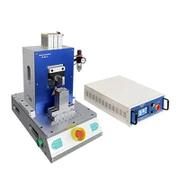
How to use an ultrasonic fabric sewing machine to process surgical gowns?
Aug 06, 2025
1. Material Preparation
Surgical gowns are typically made from PP non-woven fabric, SMS medical protective material, or laminated fabrics. Ensure materials are clean, undamaged, and pre-cut to size.
2. Machine Setup
1) Air Pressure Adjustment: Set pressure to 2–4 kg/cm² based on fabric thickness (usually 0.1–0.5mm). Excessive pressure may puncture the material.
2) Ultrasonic Frequency Calibration: Use the "Frequency Test" to adjust resonance, ensuring amplitude ≤50 and current ≤0.6A to prevent underperformance or overload.
3) Pattern Wheel Selection: Install specialised wheels to match functional requirements (e.g., fluid-resistant edges or elastic band fixation).
3. Processing Steps
1) Alignment: Position fabric edges precisely (<1mm) under the wheel using guide belts or laser alignment.
2) Ultrasonic Bonding:
Activate the wheel via foot pedal; ultrasonic vibrations (20–35kHz) generate friction heat for instant sealing.
Parameters: Speed 10–40m/min, indirect heating at 80–120℃ (prevents charring).
3) Integrated Trimming: Some models feature rotary blades to trim excess edges simultaneously.
4. Quality Inspection
(1) Seal Integrity: Manually test seams for delamination or cracks.
(2)Sterility: Post-process sterilisation (e.g., ethylene oxide or irradiation) ensures no contaminants are introduced.