


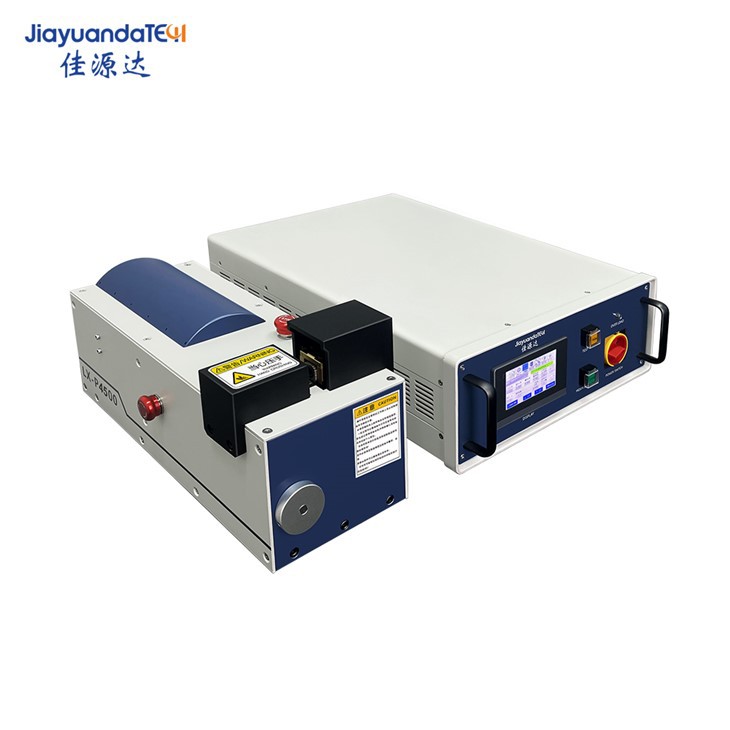
Ultrasonic Metal Wire Welder
The welding principle of Ultrasonic Metal Wire Welder is a special welding method that uses the mechanical vibration energy of ultrasonic frequency (over 16KHz) to connect the same or dissimilar metals.
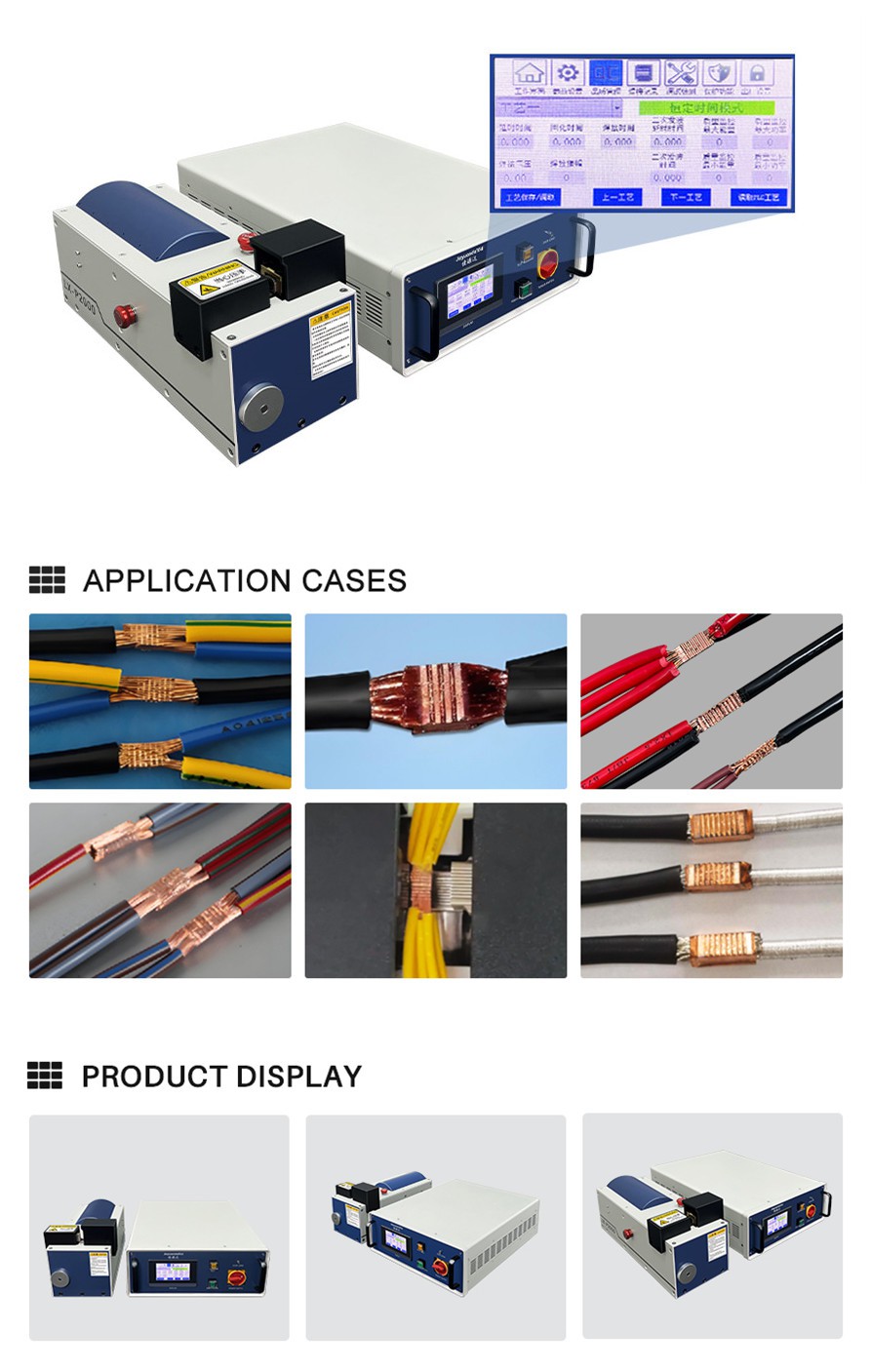
The welding principle of Ultrasonic Metal Wire Welder is a special welding method that uses the mechanical vibration energy of ultrasonic frequency (over 16KHz) to connect the same or dissimilar metals. The ultrasonic wire welding machine adopts air pressure regulation, and the speed can be customized. The high-quality ultrasonic generator, transducer and tool head can carry out the 24-hour uninterrupted welding process. Used in automobile harness, household appliances and other industries. The production efficiency is greatly improved and the production cost is saved.
Parameters
| Product number | LX20-P2000 | LX20-P4500 |
| Power supply | Single phase voltage AC220V-50Hz | Three phase voltage AC380V-50Hz |
| Air supply | Compressed air 0.1-0.6MPa | |
| Usage environment | Temperature 25 ± 5% humidity 30-90 | |
| Ultrasonic peak power | 2000W | 4500W |
| Maximum power of the machine | 2600W | 4800W |
| Ultrasonic frequency | 20KHz+0.5K | 20KHz+0.5K |
| Maximum ultrasound time | 4S | 4S |
| Adjustable accuracy of ultrasound time | 0.01S | 0.01S |
| Ultrasonic mold connection thread size | 1/2*20UNF | 1/2*20UNF |
| Weldable copper and aluminum wire sizes | 0.5-20mm² | 2.5-50mm² |
| Equipment size |
Frame: 20×48×22(cm) Chassis: 48×20×36(cm) |
Frame: 20×49×19(cm) Chassis: 48x20x36(cm) |
Features
Efficient welding, can run for a long time;
Wear-resistant ultrasonic tool head, high-frequency generator and transducer, long service life;
The surface of the welded product is smooth and beautiful. It is an excellent ultrasonic metal welding equipment for high-quality metal welding coils and wire harnesses.
FAQ
Q: How to determine the most suitable amplitude for Ultrasonic Metal Wire Welder ?
A: A method to determine the appropriate amplitude required for ultrasonic welding
Ultrasonic welding is one of the most common plastic welding processes in the industry. The three most important parameters of this process: amplitude, duration (welding time) and force (welding pressure). Welding time and pressure are parameters that are easy to adjust later in the process development. The amplitude is often determined in the early stage of development, and it is difficult to change it in the later stage, so a suitable amplitude must be designed in advance.
Although based on accumulated experience in the industry, many general-purpose materials have recommended design amplitudes. However, as newly developed special materials are rapidly increasing, it is hoped that there will be an experimental method to determine the minimum amplitude required for the materials. Here, we introduce a feasible method for determining the minimum required amplitude.
The output amplitude of the welding head depends on the equipment frequency, the output amplitude of the transducer, the transformation ratio of the amplitude modulator (horn), and the shape design of the welding head. A typical welding head design method is: under the condition of lower than the fatigue limit stress of the material, the larger the welding head design transformation ratio, the better (that is, the larger the output amplitude, the better). If you need to reduce the amplitude, change the amplitude modulator with a smaller ratio or adjust the voltage to reduce the amplitude.
However, this design method has some disadvantages:
The transformation ratio cannot be evenly distributed, that is, the transformation ratio of the welding head and the amplitude modulator are very different. It should be noted that when the welding head and the amplitude modulator have a close transformation ratio, the performance of the ultrasonic triplet (transducer + amplitude modulator + welding head) will be improved.
By changing the voltage to reduce the welding head transformation ratio, at the same time it will reduce the maximum output power of the electric box. For example, when the amplitude is set to 50%, an electric box with an original output power of 2400W will actually output 1200W. It is easy to cause overload.
Using large amplitudes can cause unacceptable damage to parts. For example, cracks in a small cross-sectional area may cause burns in appearance, and may cause damage to membranes, filter membranes, and electronic components.
For the above reasons, it is very important to define the suitable amplitude required for ultrasonic welding of plastics in the early stage.
For more details of Ultrasonic Metal Wire Welder, please feel free to contact us !




Send Inquiry
